

In Digital Signage, energy efficiency is no longer just a sustainable choice – it has become a real design requirement. Displays installed in public spaces, bus stops, stations, urban areas and outdoor environments must ensure content is always clear and readable while simultaneously reducing energy consumption, operating costs and environmental impact.
ùIn this context, bistable LCD technology represents a solution designed to keep content visible with significantly lower energy requirements compared to traditional displays. The operating principle is simple: the display mainly consumes energy when content is updated, while the image already shown can remain stable over time with minimal power consumption.
For Fida, this technological evolution takes concrete form in the FTX outdoor monitor, developed to meet the needs of modern Digital Signage: delivering clear and always-visible communication even in outdoor environments, while supporting more efficient and sustainable communication models, also through integration with solar power systems.
Bistable LCD technology: what does it mean?
Bistable LCD technology allows a display to keep an image visible until the next update without requiring continuous refreshing. This approach significantly reduces energy consumption in applications where information does not need to change in real time.
The term “bistable” refers to the panel’s ability to maintain the displayed image in a stable state. Unlike a traditional LCD, which requires continuous power to keep the image active, a bistable LCD display mainly uses energy during content updates.
This characteristic makes the technology particularly suitable for applications involving long-term information display, such as timetables, alerts, service messages, transportation information, urban signage, institutional communication and content updated at scheduled intervals.
Bistable LCD displays, e-paper and traditional LCD: differences and applications
Bistable LCD displays and e-paper displays share the same goal: reducing energy consumption in information display applications. However, they are different technologies designed to meet specific operational requirements.
E-paper technology is valued for its excellent readability in natural light and extremely low energy consumption. It is particularly suitable for information that remains visible for long periods, such as public transport timetables, digital signage, electronic labels and content that is updated infrequently.
A bistable LCD display is a complementary solution for low-power outdoor applications requiring full-colour content, remote updates and integration with professional digital systems for Digital Signage, Smart Cities and Passenger Information.
Traditional LCD monitors remain an effective solution for applications requiring video, animations and frequently updated multimedia content. However, keeping the image and backlight system active normally requires a continuous power supply.
There is therefore no single technology that is best in every situation: the choice between bistable LCD, e-paper and traditional LCD depends on the application, the type of content, the required update frequency and the environmental conditions of the outdoor installation.
In a sustainable Digital Signage project, the key is to choose the outdoor display not only according to its size and brightness, but above all according to how the information will actually be used, its energy consumption and the level of efficiency required.
| Feature | Bistable LCD display | E-paper display | Traditional LCD monitor |
| Image retention | Keeps the image visible until the next update | The image remains visible without a continuous power supply | Requires a continuous power supply |
| Power consumption with static content | Very low with static images | Very low with static images | Continuous during operation |
| Readability in natural light | High in reflective outdoor panels | High | Depends on brightness and optical treatments |
| Content updates | Scheduled updates and full-colour information content | Static or infrequently updated content | Frequent updates, video and animations |
| Full-colour content | Yes | Colour solutions are also available, depending on the technology | Wide colour reproduction |
| Solar power | Particularly suitable due to low energy consumption | Particularly suitable due to low energy consumption | Possible, but requires a larger power system |
| Main applications | Passenger Information, Smart Cities and outdoor Digital Signage | Timetables, digital signage and electronic labels | Multimedia and advertising Digital Signage |
Low-power bistable LCD displays: how do they work?
A bistable LCD display keeps the image visible until a new content update is performed. In practice, the system mainly uses energy during image changes, while minimizing the power required to maintain already displayed content.
This approach differs from traditional displays, where the continuous operation of the display system results in higher energy consumption. In outdoor environments, where a monitor may operate for many hours a day or continuously in 24/7 mode, this difference can become a strategic factor in terms of energy efficiency and operational management.
The advantages are not limited to energy savings alone. A low-power outdoor monitor can simplify system design, reduce dependency on the electrical grid and make installations more sustainable in locations where traditional power infrastructure is difficult to implement, expensive or inefficient.
The advantages of bistable LCD technology in Digital Signage
One of the main advantages of bistable LCD displays is their high energy efficiency. The technology is designed to use energy mainly during content updates, significantly reducing consumption during static information display.
This characteristic provides concrete benefits for companies and operators involved in the design, installation and management of outdoor Digital Signage systems. Key advantages include:
- lower energy consumption, especially in applications with scheduled content updates;
- greater operational autonomy, ideal for battery-powered or solar-powered installations;
- reduced operating costs thanks to lower power consumption;
- improved environmental sustainability through reduced energy impact during the system lifecycle;
- greater installation flexibility, even in areas with limited electrical infrastructure.
Thanks to these characteristics, bistable LCD technology represents a particularly interesting solution for more efficient and sustainable Digital Signage systems aligned with the evolution of Smart Cities and contemporary public spaces. più efficiente, sostenibile e coerente con l’evoluzione delle Smart City e degli spazi pubblici contemporanei.
Outdoor applications: when low power consumption becomes a design requirement
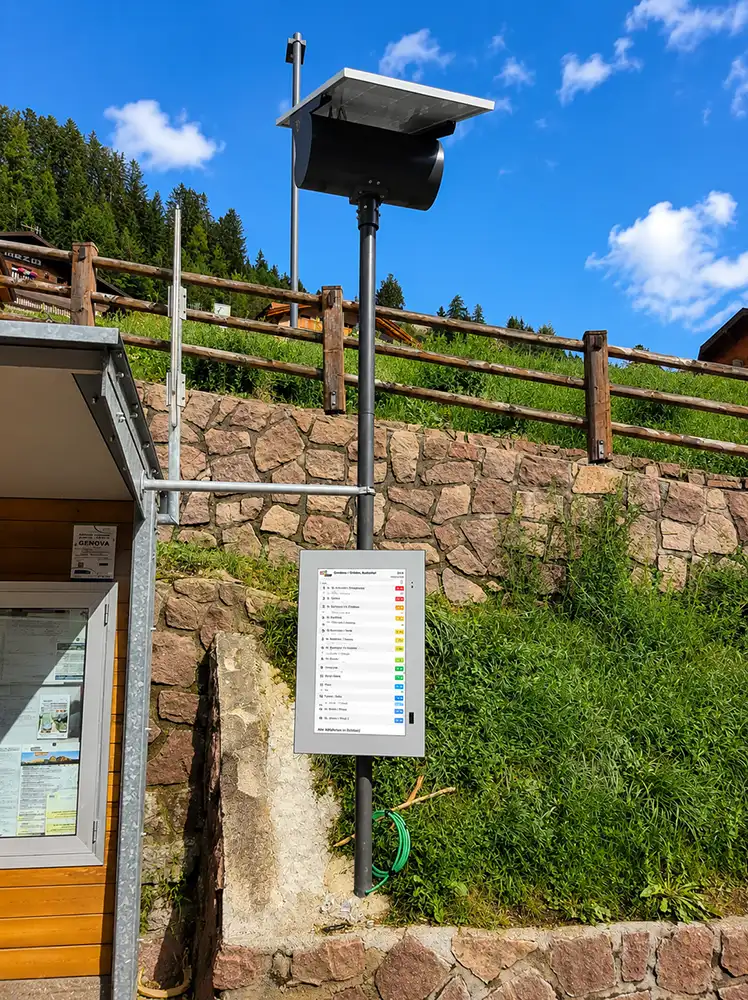
Bistable LCD technology is particularly suitable for outdoor Digital Signage applications, where much of the public information displayed does not require continuous real-time updates. In stations, bus stops, parking areas, urban spaces and transportation hubs, the main objective is to ensure content remains clear, readable and always available while maintaining low energy consumption.
An information display installed at a remote bus stop, a park-and-ride facility or within an urban infrastructure does not always have easy access to the electrical grid. In these contexts, energy efficiency is not just an operational advantage – it can become a real design requirement, directly affecting both the sustainability and feasibility of the installation itself.
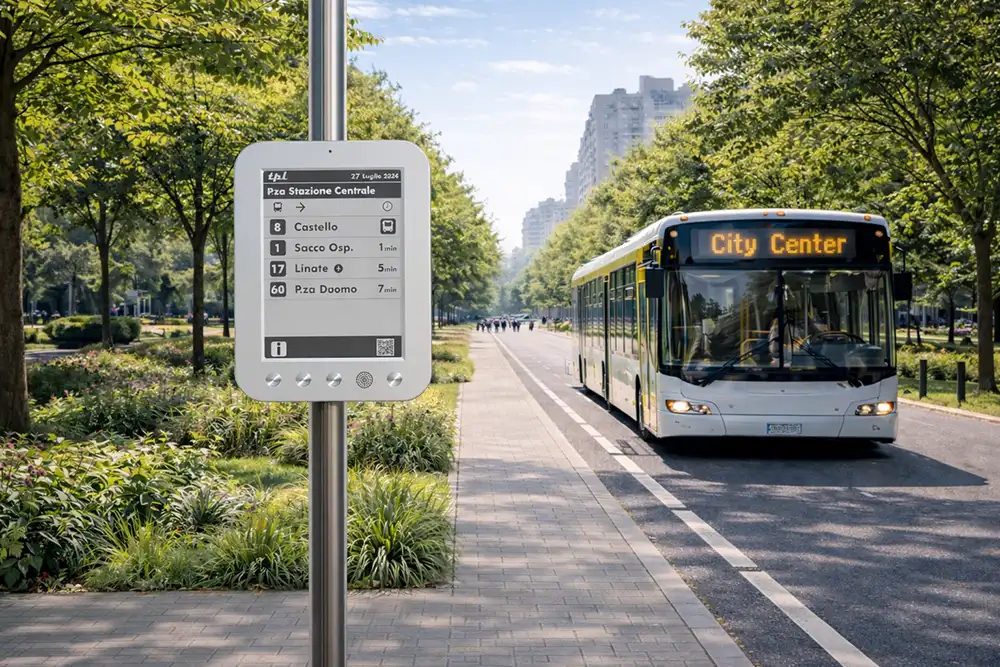
At a bus stop, for example, a display may show timetables, service alerts, route information, mobility updates or public communication messages. When this content is updated only when necessary, a bistable LCD display can keep the information visible while significantly reducing power consumption compared to traditional systems.
In outdoor environments, low power consumption must also be combined with other essential characteristics such as reliability, readability, operational continuity and resistance to external conditions. A display designed for real-world outdoor applications must ensure stable performance even when exposed to natural light, temperature variations, dust, humidity and continuous operation.
Bistable LCD and e-paper: what are the differences?
Bistable LCD and e-paper technologies share the same goal: reducing energy consumption in information display applications. However, they are different technologies designed to meet different operational requirements.
E-paper technology is known for its excellent readability under natural light conditions and its extremely low power consumption. It is particularly suitable for long-duration information display, digital signage, electronic labels and applications where content is updated infrequently.
Bistable LCD technology, on the other hand, can represent a complementary solution for outdoor applications requiring deeper integration with digital systems, more dynamic content management and professional configurations dedicated to Digital Signage and mobility applications.
There is therefore no universally “better” technology – the choice depends on the application context, the type of content being displayed and the required update frequency.
In sustainable Digital Signage, this is the real strategic point: selecting a display not only according to size or brightness, but according to the actual use of the information and the efficiency requirements of the project.
FTX: the outdoor monitor designed for energy efficiency
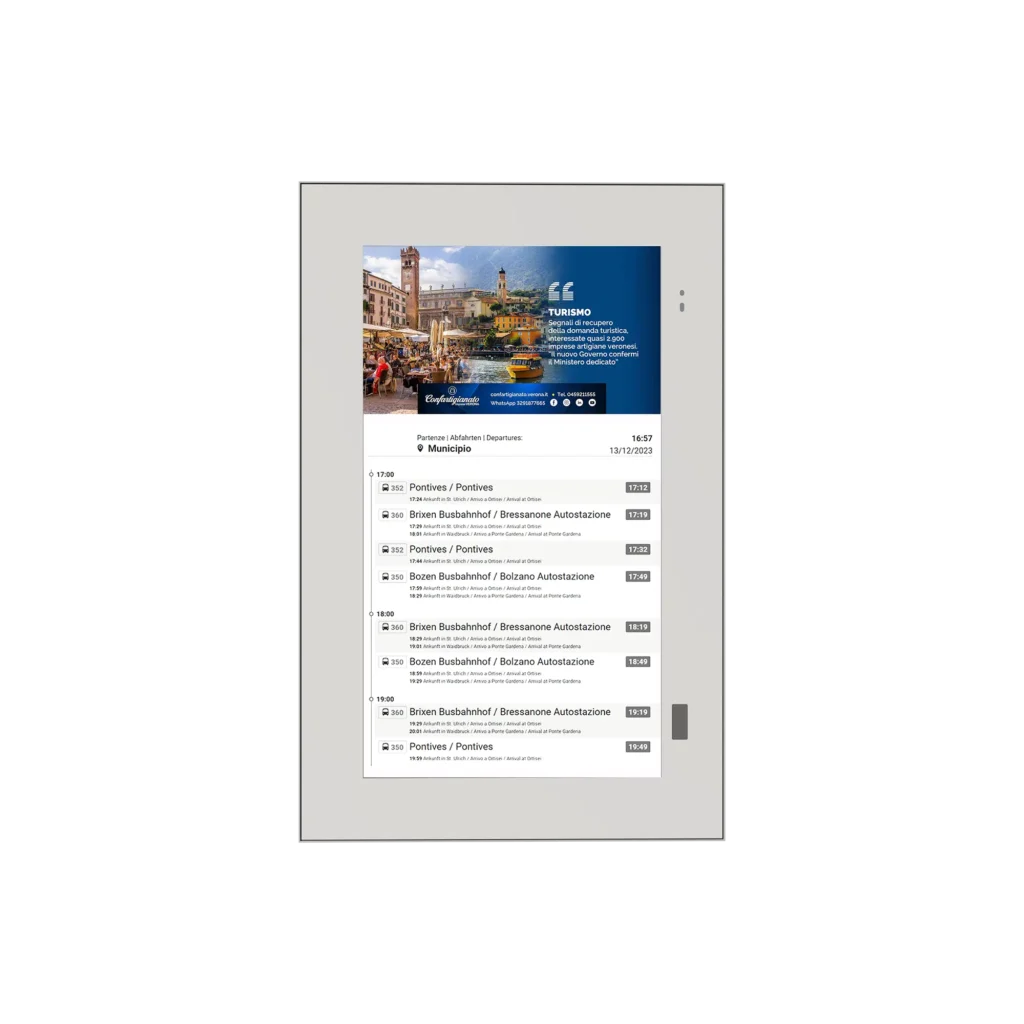
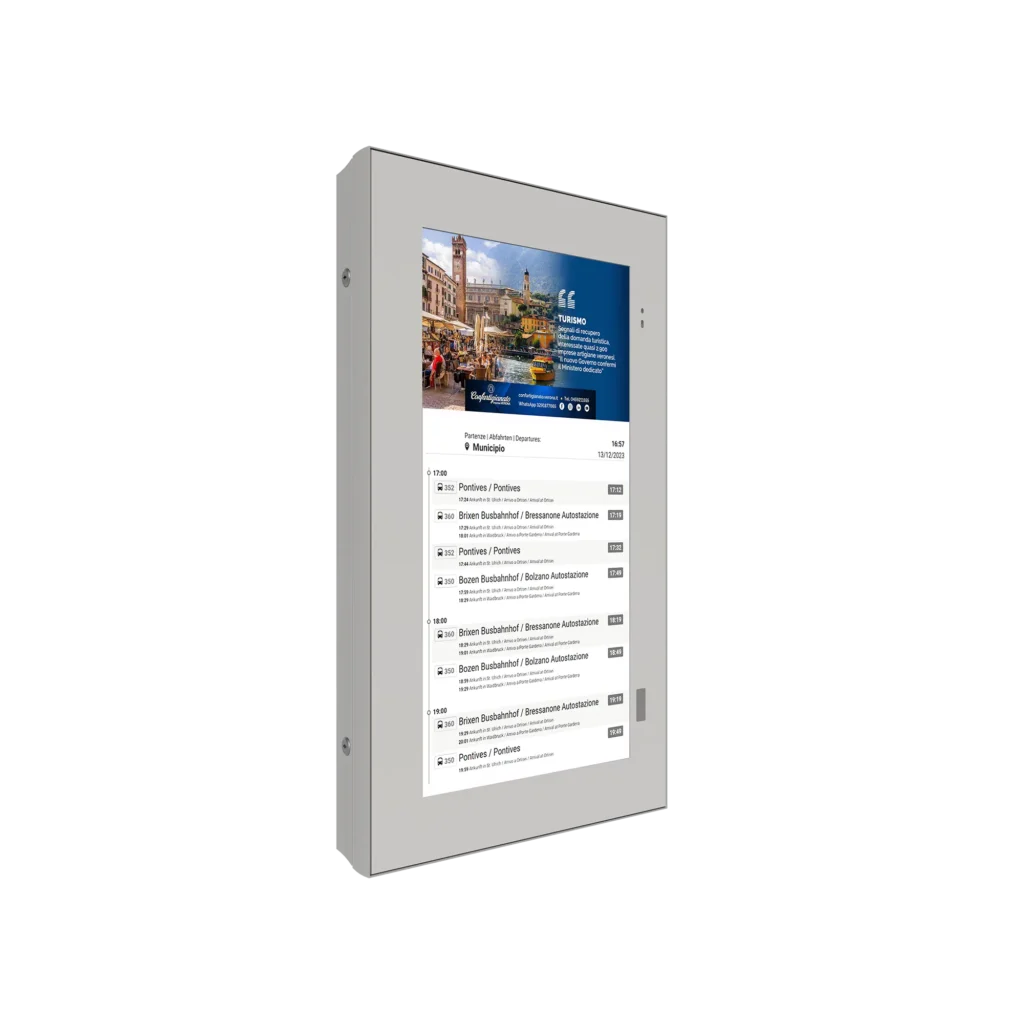
FTX is Fida’s outdoor monitor developed for low-power Digital Signage applications and for environments where energy efficiency, readability and sustainability are essential project requirements. Its bistable LCD technology allows information to remain visible while significantly reducing energy consumption, making it suitable for outdoor installations and public communication systems.
With FTX, Fida introduces a solution designed to meet the evolving needs of the market: digital communication systems capable of ensuring clear content and operational continuity while adopting a more efficient approach to energy management. This becomes particularly relevant in Smart City, Transportation, Passenger Information and urban communication projects, where devices must operate continuously and across large-scale infrastructures.
FTX therefore represents not only an outdoor monitor, but also a design approach focused on creating more efficient information infrastructures, integrated within the urban environment and aligned with new energy sustainability requirements.
FTX for Transportation, Smart City and public communication
FTX is designed for outdoor applications where clear, updatable and always-available information is required. Bistable LCD technology makes it particularly suitable for contexts where content must remain visible for long periods, with updates performed only when necessary.
One of the most relevant application areas is the Transportation sector, where passenger information must be immediate, reliable and easy to read. Bus stops, shelters, stations, terminals, parking areas and intermodal hubs are all environments where a low-power outdoor display can contribute to a more efficient management of information infrastructure.
FTX is also suitable for Smart City and urban communication projects, including public alerts, environmental information, institutional communication, wayfinding and mobility updates. In these scenarios, reduced energy consumption and greater installation flexibility become strategic advantages for end users, public authorities, operators and infrastructure managers alike.
Sustainability, autonomy and reduced power consumption
FTX contributes to a more sustainable approach to Digital Signage through more efficient energy management compared to traditional displays. Bistable LCD technology reduces energy consumption during information display, using power mainly during content updates.
This advantage becomes even more strategic when the monitor is integrated with solar power systems. In these scenarios, the display can support more autonomous installations, reducing dependence on the electrical grid and expanding application possibilities even in locations where traditional power infrastructure would be difficult or expensive to implement.
From this perspective, sustainability is not limited to environmental impact alone – it involves the entire design approach, including installation, maintenance, operational management and overall system efficiency.
For Digital Signage infrastructures distributed across urban and public environments, reducing power consumption means designing solutions that are more efficient, flexible and sustainable over the long term.
Fida: technology, customization and Made in Italy
Choosing Fida means relying on a partner specialized in the development of solutions for Digital Signage, Passenger Information and Transportation Solutions. With more than 30 years of experience in the industry, the company develops products designed not only to display content, but to meet real-world requirements in terms of visibility, reliability, integration and customization.
In the case of FTX, the value lies not only in bistable LCD technology itself, but also in Fida’s ability to transform it into a concrete solution for outdoor environments and complex infrastructures. Each project may require dedicated configurations, customized dimensions, specific power systems, different protection levels and integrated management solutions.
This is precisely the approach that defines Fida: customization is not considered an optional feature, but an integral part of the project development process. In professional Digital Signage, installing a display is not enough – what matters is delivering a solution designed around the environment, the infrastructure and the final user experience.
Design, customization and Made in Italy manufacturing therefore become key elements in creating communication systems that are more efficient, reliable and sustainable over time.
Frequently asked questions about outdoor bistable LCD displays
What is a bistable LCD display?
A bistable LCD display is a low-power screen capable of keeping an image visible until the next update. The panel mainly uses energy when the content changes, reducing power consumption while displaying static information.
How does a bistable LCD display work?
Bistable LCD technology allows pixels to retain the state reached after an image update. The display therefore does not need to refresh the content continuously, helping to reduce energy requirements.
How much power does a bistable LCD display consume?
The power consumption of a bistable LCD display depends on its size, update frequency, night-time lighting and any integrated sensors or devices. The greatest advantage is achieved when content remains static or is updated only when necessary.
What is the difference between a bistable LCD display and a traditional LCD?
A traditional LCD monitor normally requires a continuous power supply to keep the image and backlight active. A bistable LCD display, by contrast, can retain the displayed content with very low power consumption.
What is the difference between a bistable LCD display and e-paper?
Both are low-power display technologies, but they work differently. E-paper is particularly suitable for static content that is updated infrequently, while bistable LCD can provide full-colour images and greater integration with professional digital systems for outdoor Digital Signage.
Is a bistable LCD display readable in direct sunlight?
Yes, provided that the reflective display is designed for outdoor use. Ambient light contributes to content visibility; sunlight readability also depends on the panel characteristics, anti-reflective treatment, protective glass and screen orientation.
Does an outdoor bistable LCD display also work at night?
Yes. When natural light is unavailable, the outdoor monitor can use a controlled lighting system. At night, lower brightness levels than those required during the day are sufficient, further reducing energy consumption.
Can a bistable LCD display be powered by solar panels?
Yes. Its low energy requirements make a bistable LCD display suitable for integration with solar panels and batteries, facilitating installation in areas without a direct connection to the power grid.
Where are outdoor bistable LCD displays used?
Outdoor bistable LCD displays can be installed at bus stops, shelters, railway stations, car parks, parks, terminals, interchange hubs and urban information points. They are suitable for Passenger Information, Smart City, wayfinding and public information projects.
What content can a bistable LCD display show?
It can display timetables, waiting times, route information, maps, service notices, emergency messages, directions and other updates relating to urban mobility.