

In motorway service areas, bars and restaurants, every customer touchpoint can become an opportunity to communicate more effectively, guide purchasing decisions and make the overall experience smoother. In environments characterised by continuous customer flows, fast service and the need for immediate information, visual communication is no longer an accessory – it is an operational tool that directly impacts the quality of the customer experience.
Digital Signage for motorway service areas, bars and restaurants addresses this need by transforming professional displays, digital totems and interactive kiosks into dynamic tools that inform, promote, guide and support customers throughout their journey within the venue.
From menu presentation and promotional campaigns to self-ordering and electronic payment, digital solutions make communication clearer, more up-to-date and better aligned with operational requirements. This is not simply about replacing printed materials with digital screens; it is about introducing a more flexible and intelligent way of engaging with customers.
Customers often have limited time to make a choice. They need information that is immediate, easy to read and well organised. Digital Signage helps meet these expectations, improving the usability of spaces while supporting staff operations.
Digital Signage for Motorway Service Areas, Bars and Restaurants: Functions and Strategic Objectives
Digital Signage for motorway service areas, bars and restaurants combines hardware technologies – such as professional displays, digital totems and interactive kiosks – with software solutions that enable dynamic content distribution across strategically positioned screens throughout a venue.
These are not simple display devices, but solutions integrated into the customer journey, designed to inform visitors, support decision-making, simplify ordering and payment processes and enhance the overall experience within the venue.
Let us look at the main functions and objectives of Digital Signage in motorway service areas, bars and restaurants.
- Making Menu Communication Clearer
The menu is one of the first points of interaction between customers and a venue. Through digital displays and menu boards, bars and restaurants can present products, prices, images, meal combinations and special offers in a clear and easily updateable format. In a motorway service area, for example, a digital menu can help customers quickly distinguish between breakfast options, snacks, hot meals, beverages, promotions and additional services.
- Supporting Customer Flow Management
In high-traffic environments, customer flow management is essential. Digital Signage enables information to be distributed at the most effective touchpoints: entrances, checkout areas, waiting zones, routes leading to the counter and outdoor spaces. This allows customers to receive useful information before reaching the ordering stage, reducing uncertainty and improving operational efficiency.
- Promoting Offers and Content Dynamically
Digital communication allows businesses to update promotions, new products, seasonal offerings and commercial content in real time. Breakfast promotions can automatically transition to lunch menus, limited-time offers can be highlighted during specific time slots and informational messages can alternate with promotional or service-related content.
- Encouraging Cross-Selling and Increasing Average Transaction Value
Digital Signage is also a powerful sales tool. Through attractive visuals, purchasing suggestions and targeted promotions, businesses can encourage customers to choose complementary or higher-value products. A digital menu board can suggest pairing a sandwich with a beverage, highlight menu upgrades or promote desserts, snacks and seasonal products. Thanks to the ability to update content instantly and tailor messages according to time of day or location, Digital Signage helps stimulate additional purchases and increase average transaction value.
- Enhancing the Customer Experience
Clear information contributes to a smoother customer journey. When customers immediately understand what they can order, where they need to go, which options are available and how to complete payment, the entire service becomes simpler, more intuitive and more enjoyable. In this sense, Digital Signage becomes an integral part of the customer experience.
Essential Features of Digital Signage for Hospitality Environments
Digital Signage solutions must address specific operational requirements. Every environment has different characteristics: some spaces are indoor, others outdoor or semi-outdoor; some venues experience continuous traffic, while others face concentrated peak periods; some require simple information displays, while others demand interaction, ordering and payment functionalities.
Readability in Every Condition
Readability is a fundamental requirement. Content must remain visible from different distances and viewing angles, even in bright environments or areas exposed to natural light.
In indoor bars and restaurants, display clarity improves the visibility of menus and promotional content. In motorway service areas and hospitality venues with outdoor spaces, additional factors such as direct sunlight, environmental conditions and device positioning must also be considered.
Effective digital communication must therefore be designed not only around the content itself, but also around the physical environment in which that content will be displayed.
Reliability and Continuous Operation
In high-traffic locations, devices must be reliable and durable. Totems and kiosks installed in publicly accessible areas are exposed to continuous use, frequent interaction and potential external impacts.
For this reason, mechanical robustness, material quality and operational continuity are critical factors. A Digital Signage system designed for hospitality environments must deliver stable long-term performance, minimise service disruptions and simplify maintenance activities.
Simple and Intuitive Interaction
When Digital Signage becomes interactive, user experience takes centre stage. A self-ordering kiosk or information terminal must be easy to use, even for customers with limited familiarity with technology.
The interface should clearly guide users through each stage of the process:
- Browsing the menu
- Selecting products
- Customising the order when required
- Confirming the selection
- Completing payment, where applicable
- Receiving a ticket, receipt or order confirmation
In this way, technology does not create barriers but becomes a tool that supports customer autonomy.
Digital Signage for Motorway Service Areas, Bars and Restaurants: Key Applications
FIDA’s design approach begins with a detailed analysis of the operating environment in order to identify the most suitable solutions based on customer flows, available space, device positioning and the level of interaction required.
A motorway service area, a café, a quick-service restaurant or a food court all have different operational needs. For this reason, Digital Signage can be deployed to inform, guide, promote, manage self-service ordering processes and support digital payment systems.
Self-Ordering Kiosks for Independent Ordering
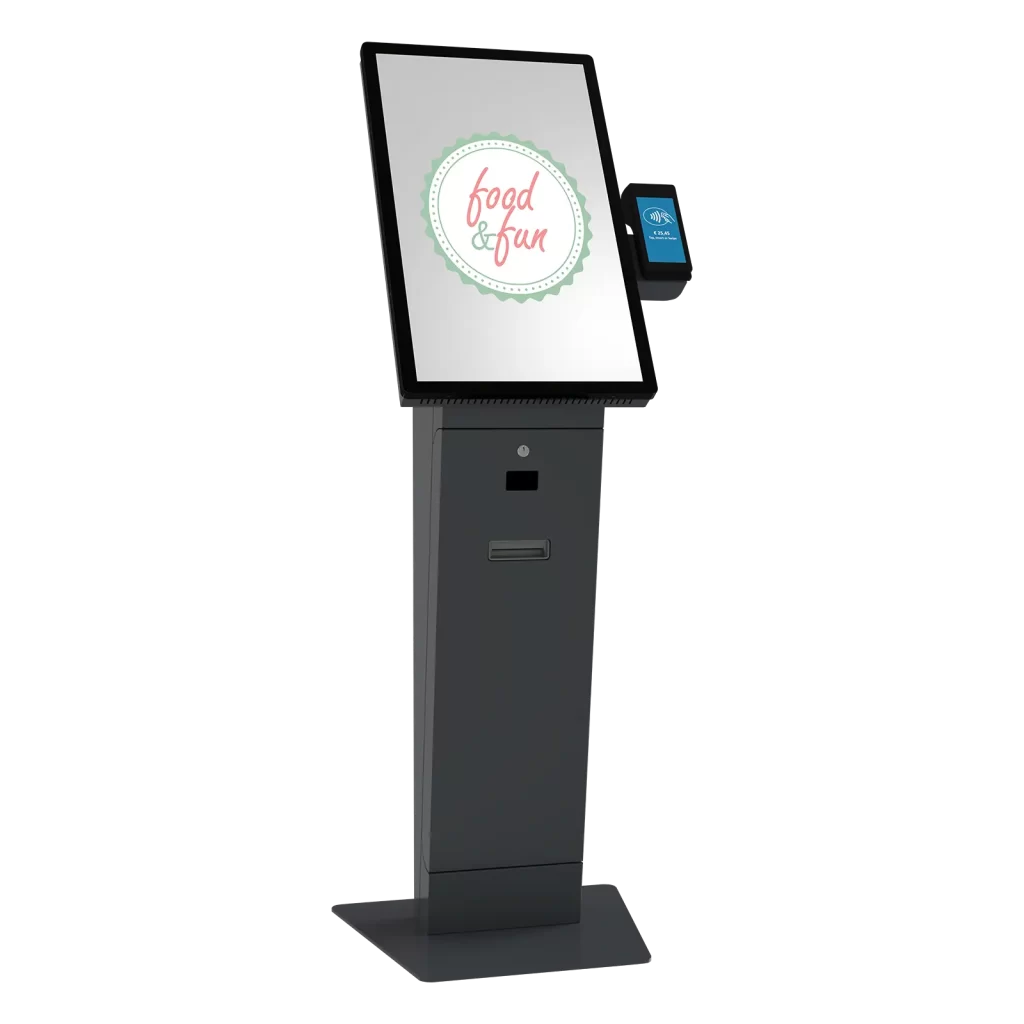
TSK self-ordering kiosk
The TSK self-ordering kiosk enhances the purchasing experience in food service environments by allowing customers to browse the menu, select products and complete their orders independently. Designed for bars, restaurants, fast-food venues and high-traffic locations, it helps streamline operations while improving customer convenience. Combining ease of use, intuitive interaction and efficient flow management, TSK supports faster service and contributes to a smoother ordering experience.

Totems and Kiosks for Information, Menus and Services
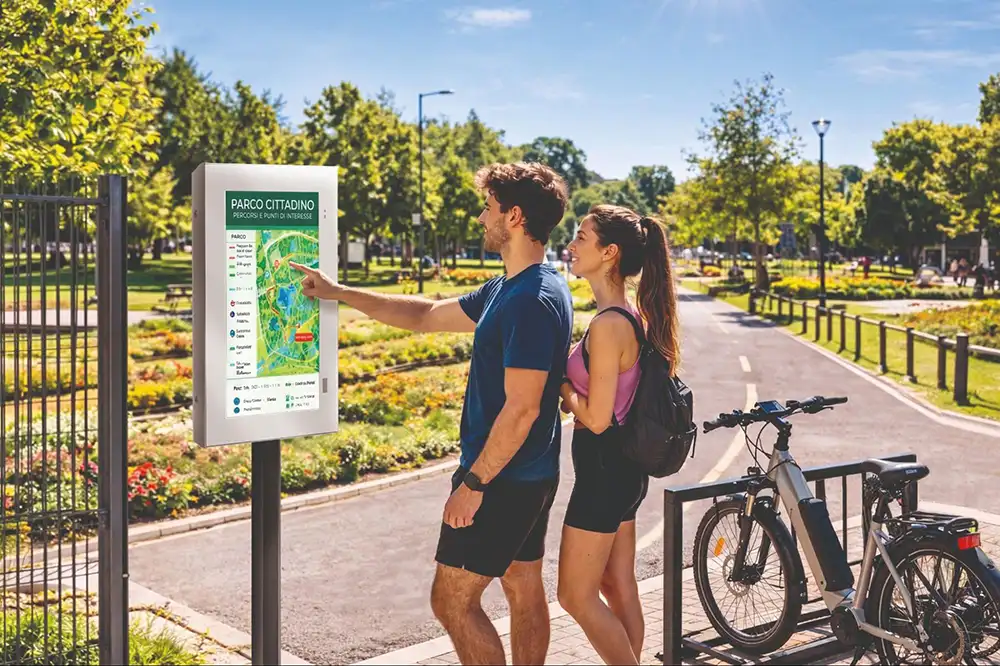
TKT/TKI interactive indoor Kiosk
TKT and TKI interactive kiosks make menus, promotions, special offers and service information more accessible to customers. Suitable for bars, restaurants, food courts and motorway service areas, they help guide customers throughout their decision-making process by providing a digital information point that is always available, easy to access and simple to use
Outdoor Solutions for External and Pre-Entrance Areas
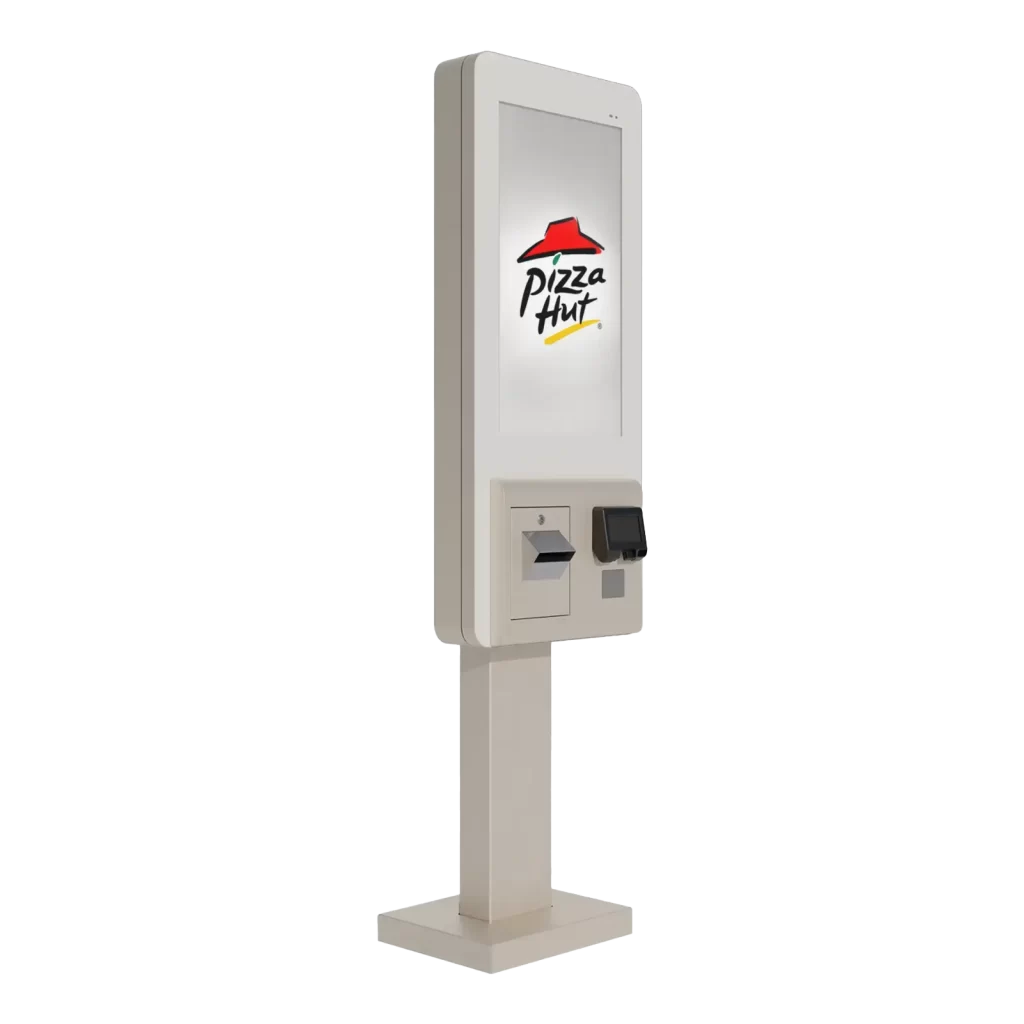
TSS outdoor self-ordering Kiosk
The TSS outdoor self-ordering kiosk extends the self-service experience beyond indoor environments, making it ideal for entrances, outdoor seating areas, parking facilities, drive-through applications and high-traffic transit spaces. It is particularly suited to locations where the first interaction with customers takes place before they enter the venue, helping streamline ordering processes, improve customer convenience and reduce waiting times.
Outdoor Digital Totems for High-Visibility Communication
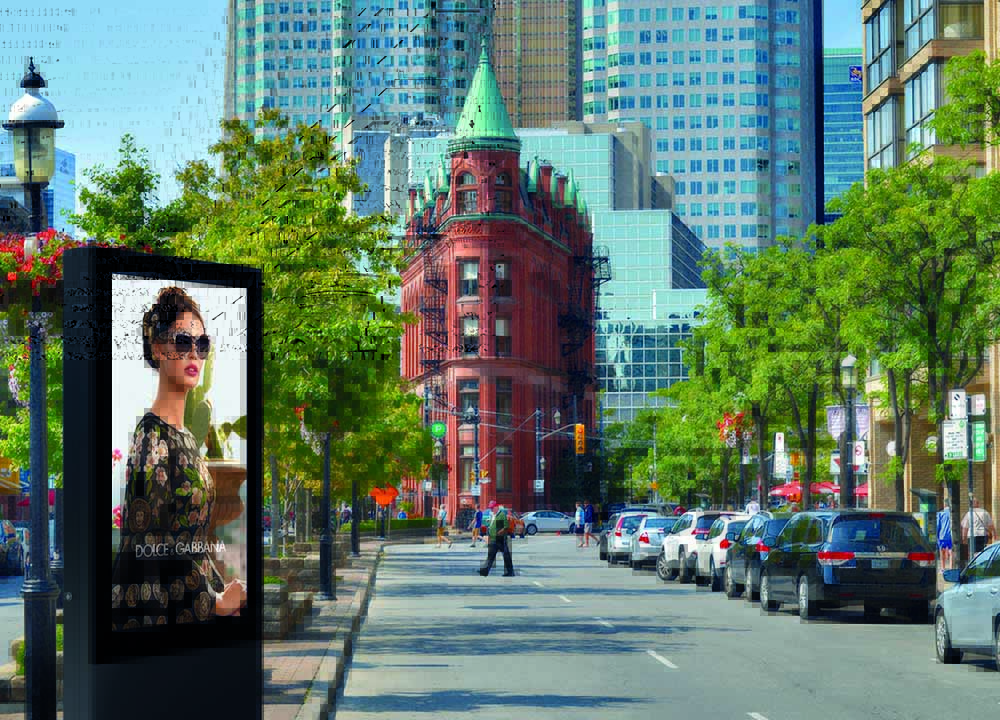
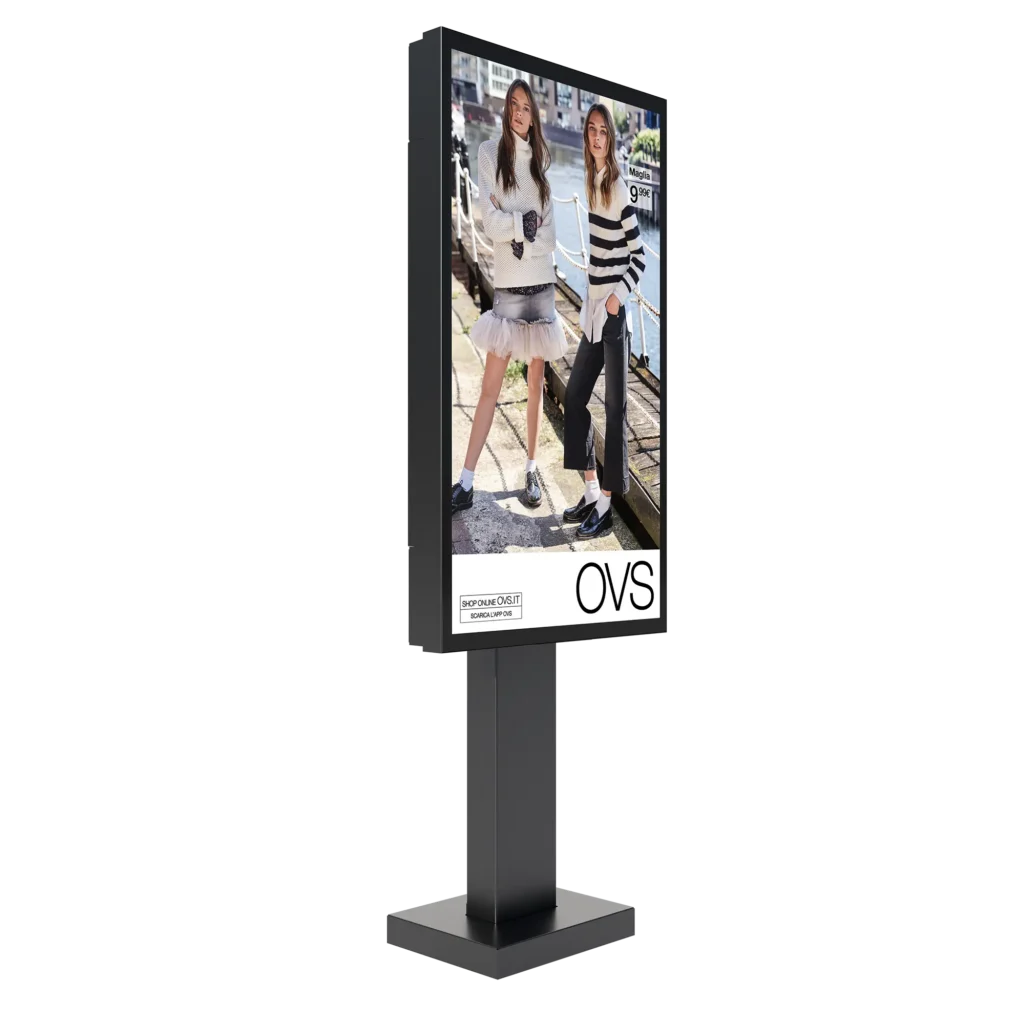
DTU outdoor digital Totem
The DTU outdoor digital totem enables the effective display of menus, promotions, service messages and informational content in highly visible outdoor environments. Designed to attract attention and communicate key information at a glance, it helps make the venue more recognisable, engaging and easy to navigate from the moment customers approach the location.
How to Choose the Right Digital Signage Solution
Selecting the most suitable Digital Signage solution depends on several factors, including the type of venue, device location, communication objectives, required level of interaction and environmental conditions.
A café may simply need a display to showcase menus and daily promotions. A quick-service restaurant may benefit from self-ordering kiosks that streamline the ordering process. A motorway service area may require a combination of indoor and outdoor solutions to support customers throughout their journey, from arrival to payment.
Indoor, Outdoor or Semi-Outdoor
The first factor to consider is the installation environment. Indoor solutions are designed for protected spaces such as dining areas, checkout zones, food courts and information points. Outdoor and semi-outdoor solutions, on the other hand, are specifically engineered for exposed locations, including entrances, parking areas, outdoor seating spaces and environments affected by natural light or challenging weather conditions.
Information, Ordering or Payment
The second consideration is functionality. If the goal is to communicate menus, promotions and offers, informational displays or digital totems may be sufficient. If the objective is to increase customer autonomy, interactive kiosks for self-ordering and payment should be considered. When serving outdoor areas, solutions specifically designed for external environments are required.
When evaluating different options, it can be useful to distinguish between three primary objectives:
- Communicate – displaying menus, promotions, offers and service information.
- Guide – helping customers understand available services, directions and access procedures.
- Interact – enabling self-service ordering, product customisation, payment or information consultation.
This approach helps identify not only the most suitable product, but also the configuration that best matches the operational needs of the venue and the customer experience being delivered.