

On the occasion of Earth Day, FIDA reaffirms its commitment to developing increasingly sustainable communication solutions, designed to reduce consumption, waste and environmental impact.
In recent years, sustainability has become a central element in corporate strategies, involving not only production processes but also communication methods. In this context, Digital Signage is emerging as a solution capable of combining communication effectiveness and reduced environmental impact.
However, it is important to clarify a point that is often taken for granted: Digital Signage is not automatically sustainable.
It is not simply a matter of replacing paper with a screen, but of adopting a more advanced system capable of optimizing resources, reducing waste, and improving operational efficiency in a measurable way.
When designed correctly, Digital Signage becomes a true sustainable marketing tool.
When poorly designed, it risks being just a more energy-intensive version of traditional communication.
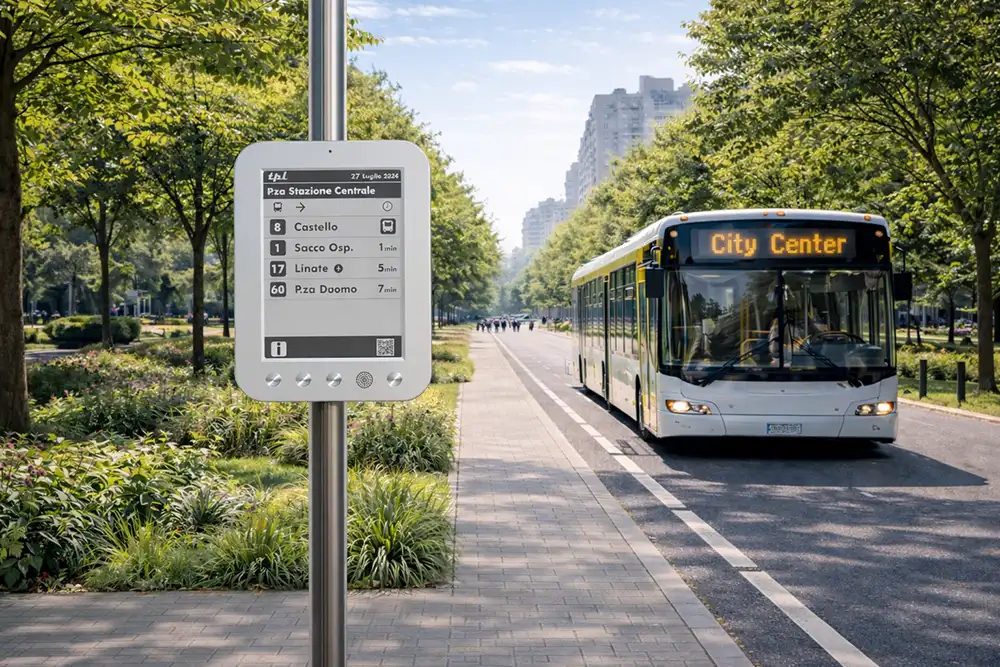
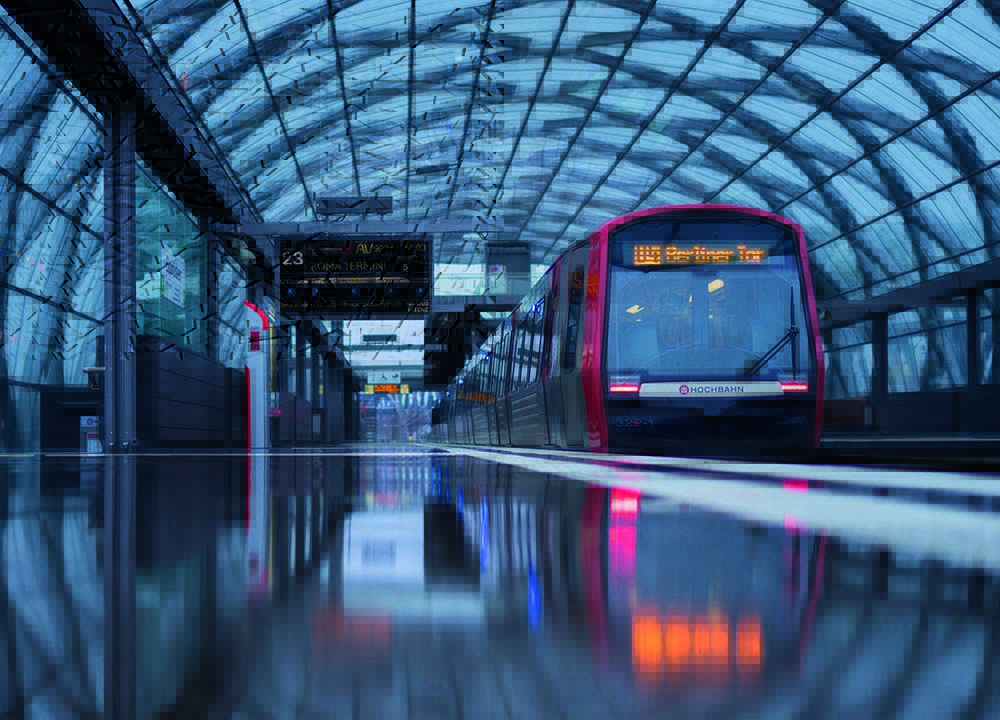
In particular, in outdoor applications and mobility contexts, this evolution translates into autonomous, connected systems designed to operate continuously with reduced consumption or, in some cases, completely independent from the power grid.
From printed materials to digital communication
Reducing the use of paper materials is often the first aspect associated with Digital Signage. However, this alone is not sufficient to define its sustainability.
To truly assess the environmental impact of a digital system, a more advanced approach is required: the concept of environmental break-even.
A Digital Signage system becomes more sustainable than traditional communication only after reaching a certain number of uses and updates. In other words, the advantage is not immediate, but is built over time.
Several key variables come into play in this balance:
- the frequency of content updates
- the operational lifespan of the device
- the usage context and its intensity
In high-rotation scenarios (such as public transport, retail, or smart cities), this break-even point can be reached quickly. In other contexts, it requires more careful evaluation.
Digital, therefore, is not sustainable by definition, but depending on how it is designed, used, and maintained over time.
Real-time updates and reduction of operating costs
One of the most relevant aspects of Digital Signage is the ability to manage content remotely. Information can be updated in real time without the need for on-site intervention.
This is not only an operational advantage, but also has a direct impact in terms of sustainability. Centralized management makes it possible to:
- eliminate most physical travel for updates and maintenance
- reduce logistics costs related to material distribution
- cut indirect emissions associated with transportation
- optimize operational resources by avoiding unnecessary activities
In contexts such as public transport or smart cities, where information changes rapidly, this capability becomes essential not only to ensure efficient service but also to reduce the overall environmental impact of the system.
Remote management also integrates with diagnostic and monitoring systems, allowing the status of devices to be checked and interventions carried out only when necessary. This approach reduces unnecessary maintenance and contributes to more efficient use of technical and energy resources.
An additional level of evolution is the shift from “reactive” communication to intelligent and contextual communication based on real data and conditions.
Communicating only when needed, and in the most effective way, also means reducing waste – not only material, but also energy-related.
Energy efficiency: a key factor
For Digital Signage to be truly sustainable, it is essential to analyze energy consumption.
Not all displays are the same: energy performance depends on several factors, including the technology used, the required brightness, and environmental conditions.
The most advanced solutions integrate systems designed to optimize consumption, such as:
- sensors for automatic brightness adjustment
- scheduled power on and off systems
- high-efficiency electronic components
But today, this is no longer enough.
The evolution of the sector is moving toward carbon-aware systems capable of adapting their operation based on the energy context and the actual usefulness of the content.
This means, for example:
- automatically reducing intensity during low-traffic periods
- activating content only when presence is detected
- optimizing scheduling based on available energy
The future is not only about communicating effectively, but about communicating in an energy-responsible way.
FIDA low-consumption solutions are designed to optimize energy usage while maintaining high operational performance, thanks to careful design of both hardware and intelligent display management.
In outdoor environments, where visibility requires high brightness levels, these optimizations are essential to balance performance and sustainability.
Low-Consumption Technologies and Alternative Solutions
Alongside traditional displays, increasingly energy-efficient technologies are emerging, designed to reduce consumption and ensure operational continuity even in complex environments.
In this context, the integration of solar energy represents one of the most advanced evolutions, especially in outdoor applications and non-wired environments. It is not a standalone solution, but rather an element that, when properly integrated, helps reduce dependency on the power grid and improves overall system efficiency.
E-paper Displays and Monitors: communication with minimal consumption
Among the most efficient technologies is e-paper, characterized by extremely low energy consumption and excellent readability even in direct sunlight.
Unlike traditional displays, e-paper systems consume energy only when content is updated, maintaining the image without continuous power draw. This makes them particularly suitable for informational contexts where content does not require frequent updates but must remain constantly visible.
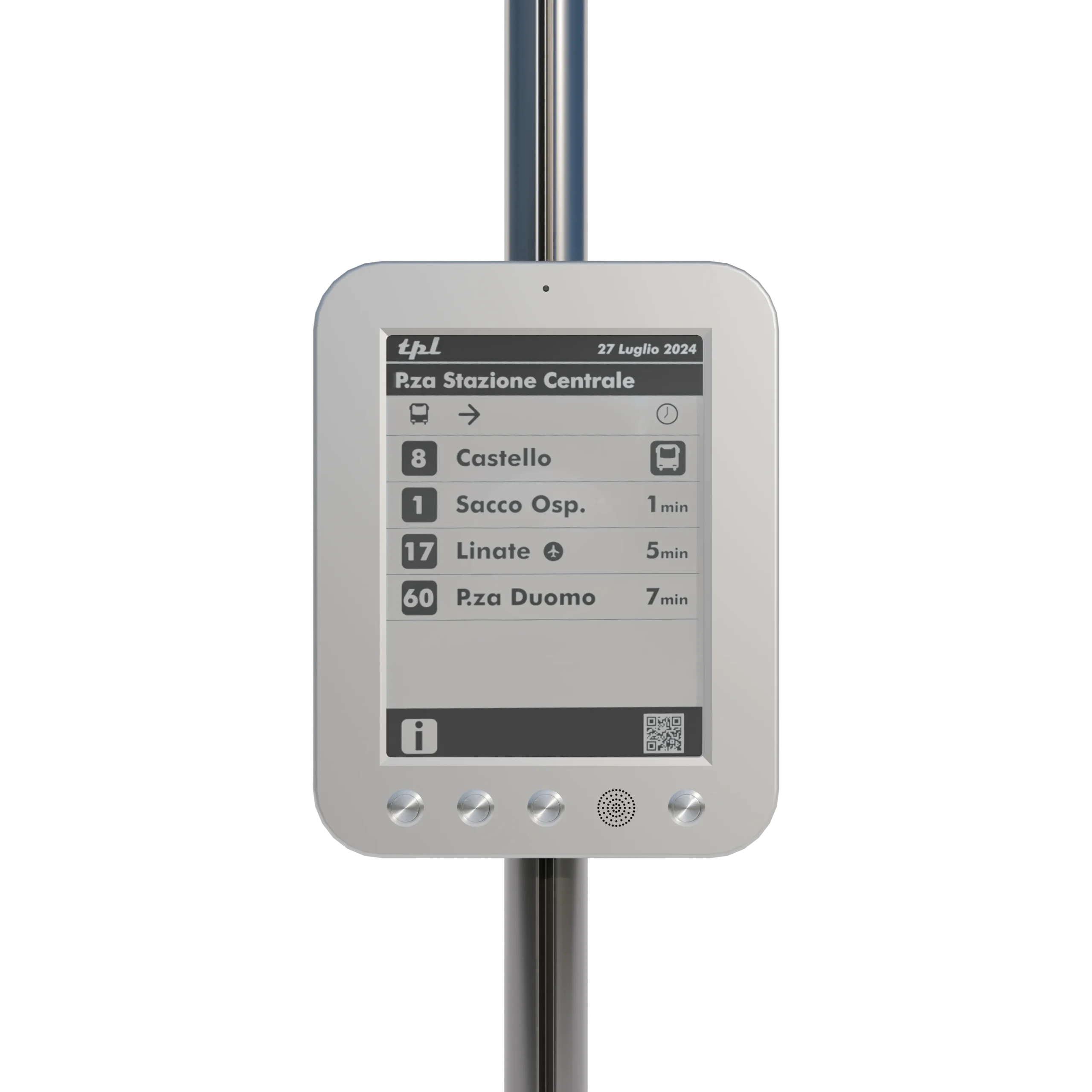
Solutions such as Fida’s e-paper LMS represent a concrete example of this approach: the integration of low-consumption technology, long-life batteries, and solar panels makes it possible to drastically reduce both energy consumption and maintenance interventions.
Learn more about Fida’s outdoor e-paper display
The growing interest in these technologies is also confirmed by market data: the e-paper sector is rapidly expanding and could reach a value of approximately 8.6 billion dollars by 2026, driven by increasing demand for sustainable solutions.
Outdoor LCD monitors: efficiency and dynamic content
Alongside ultra-low consumption solutions, there are technologies designed to manage dynamic and high-impact visual content, such as outdoor LCD monitors.
In these cases, sustainability does not come from eliminating consumption, but from optimizing it. Technological evolution has led to increasingly efficient systems capable of balancing visibility, performance, and energy consumption.
Solutions such as the FTX outdoor monitor demonstrate how it is possible to integrate solar power systems and intelligent energy management even in full-color displays, reducing overall energy impact while maintaining high visual performance.
Learn more about Fida’s solar-powered outdoor LCD display
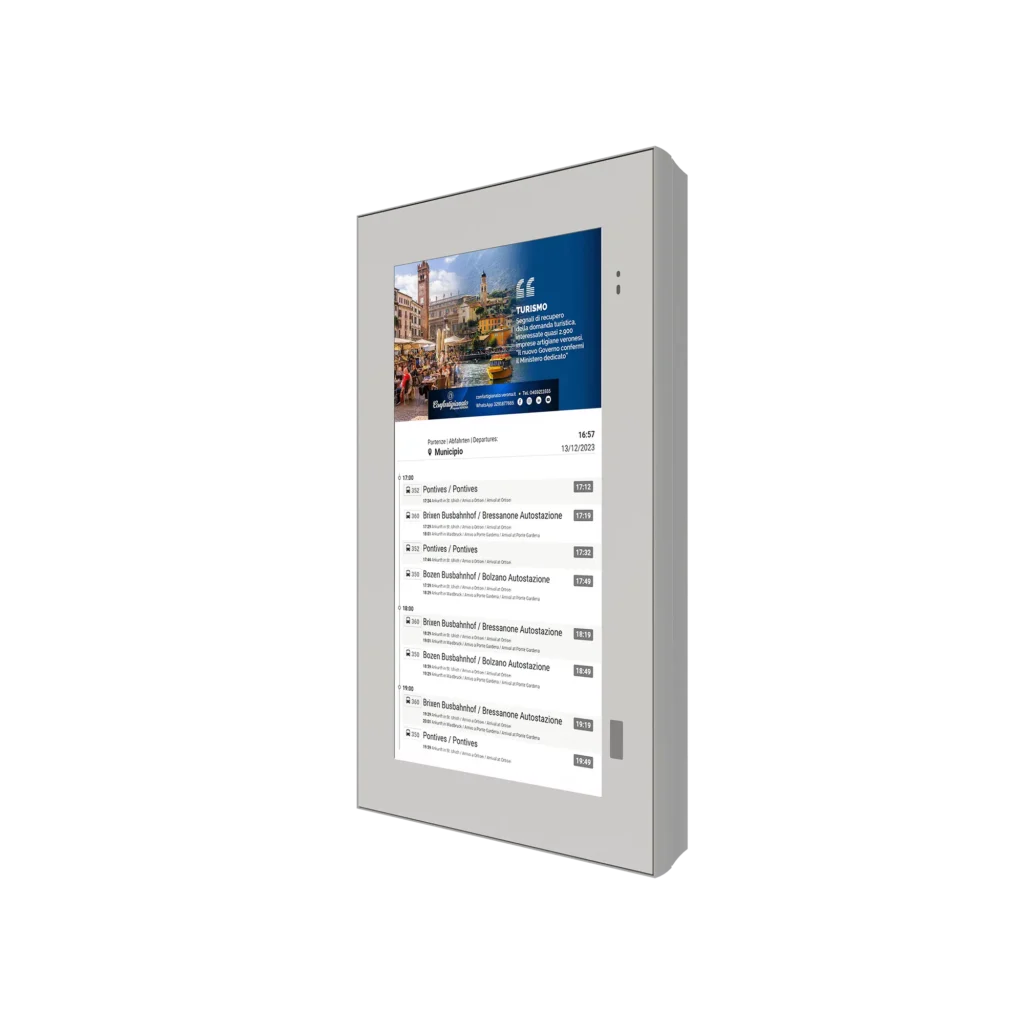
In this context, bistable LCD technology is also emerging – a particular type of display capable of maintaining the displayed image even without continuous power supply. This approach significantly reduces energy consumption, making these displays ideal for outdoor and smart city applications where energy efficiency is a key requirement.
Building on this technology, we are developing a further innovation: integrating the solar panel directly into the screen, with the aim of creating increasingly autonomous, sustainable, and easily deployable solutions, even in locations without traditional power infrastructure.
Sustainability, therefore, is not an intrinsic characteristic of the product, but the result of a conscious design choice.
Device lifespan and reduction of electronic waste
A frequently overlooked aspect concerns the lifecycle of devices.
Digital Signage systems designed for professional use are built to operate continuously, even in challenging environmental conditions.
The use of high-quality components and advanced industrial design extends the operational lifespan of devices, reducing the need for frequent replacements.
This has a direct impact on sustainability: fewer replacements mean less electronic waste and more efficient use of resources over time.
In this context, a key principle of sustainable design emerges: the most sustainable device is the one you do not need to replace.
Approaches based on modularity, upgradability, and predictive maintenance are becoming increasingly relevant.
Sustainable solutions for smart cities
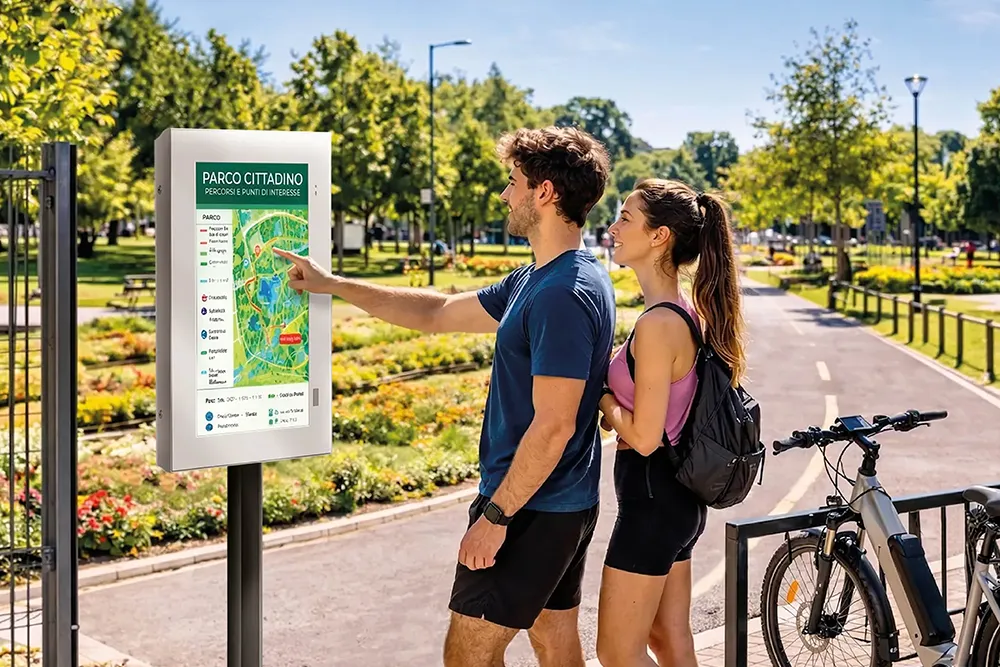
In the modern urban context, digital signage solutions for smart cities are taking on an increasingly strategic role.
They are no longer just communication tools, but real elements of urban infrastructure, capable of:
- providing real-time information
- improving the management of pedestrian flows
- supporting mobility and public information services
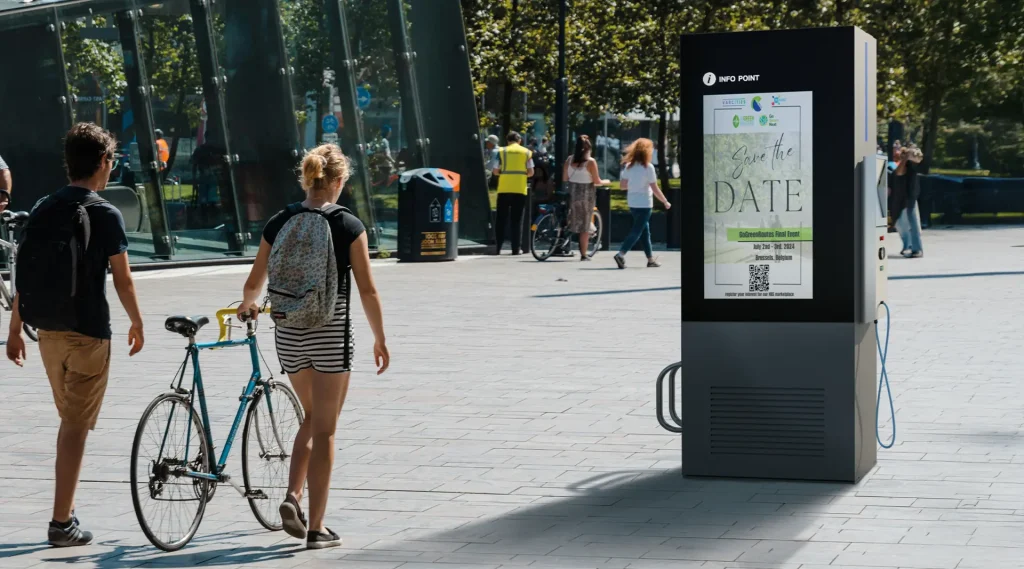
Solutions such as Fida’s ULS multifunctional totems fit into this evolution, designed to integrate multiple services within a single structure.
In addition to communication, ULS can include:
- charging for e-bikes and devices
- bicycle air compressors
- power outlets and utility services
- payment systems
- integration of safety devices such as defibrillators
This approach optimizes urban space, reducing the need for separate installations and improving overall city efficiency.
The value is no longer the display, but the ecosystem it enables.
When is Digital Signage NOT sustainable?
To gain a complete perspective, it is essential to also consider its limitations.
Digital Signage can be unsustainable when:
- it is oversized compared to the application
- it uses unnecessarily high brightness levels
- it remains active without real utility
- it delivers static content on energy-intensive technologies
- it is not designed for long-term durability
These elements highlight a key point:
sustainability is not a characteristic of the product, but the result of a conscious design choice.
The FIDA approach: tailored design and industrial vision
With over 30 years of experience in the industry, FIDA develops Digital Signage solutions designed to meet the specific needs of different application contexts.
This approach is based on:
- in-depth material analysis
- integration of low-consumption technologies
- design focused on durability and reliability
- solution customization
From ultra-autonomous e-paper solutions such as LMS, to solar-powered bistable outdoor LCD monitors such as FTX, to multifunctional smart city totems such as ULS, each project is developed with the goal of combining performance, energy efficiency, and tangible sustainability.
Towards more sustainable and intelligent communication
Today, Digital Signage represents one of the most advanced solutions for building sustainable communication strategies.
Reduced waste, energy optimization, longer device lifespan, and the ability to adapt to different contexts make this technology an increasingly relevant choice for companies and public administrations.
But the real leap forward is another:
Digital Signage will no longer be evaluated by what it shows, but by what it enables.
Services, data, urban efficiency, and energy integration are transforming these systems from communication tools into true intelligent infrastructure.
When designed with expertise and vision, Digital Signage is not just a marketing tool, but a key element in developing more advanced, efficient, and responsible communication systems.