


In preparation for the Milano Cortina 2026 Winter Olympics, Val di Fassa is getting ready to welcome visitors, athletes and sports enthusiasts with modern infrastructure and more efficient digital communication systems. Within this context is a project developed by FIDA, a company specialized in outdoor digital totems and digital signage solutions for public spaces.
The project involved the installation of new outdoor information monitors in several locations across the valley, with the goal of completely upgrading the existing communication infrastructure and improving the distribution of informational, tourist and institutional content
The installations were carried out in some of the valley’s main towns – Canazei, Pozza di Fassa, Alba di Canazei, Campitello di Fassa, Vigo di Fassa and Soraga – strategic locations for the flow of tourists and visitors throughout the year.
Project goal: modernizing digital communication across the region
The main objective of the project was to update and standardize the public information systems across Val di Fassa by introducing a new generation of high-brightness digital totems designed for outdoor use.
With the Winter Olympics approaching, local administrations chose to invest in technological solutions capable of ensuring:
- Maximum visibility of content even in direct sunlight
- Remote management of information
- Greater operational reliability
- A modern design consistent with the identity of the region
The objective was therefore to improve the information experience for both tourists and residents by offering a digital signage system that is always up to date and easy to manage.
The challenge: replacing outdated structures while preserving the identity of Val di Fassa
Before the intervention, the valley already had several information structures that had become technologically outdated. In addition to updating the technology, the project therefore had to address a double challenge:
- Modernizing the digital communication infrastructure
- Maintaining strong visual consistency with the historical identity of the valley
Furthermore, the systems had to be installed in eight different locations, ensuring both design consistency and technical compatibility across all installations.
FIDA solution: reliable outdoor digital totems with remote management
To meet the project’s requirements, FIDA developed a solution based on its outdoor digital signage systems, designed to ensure high visibility and maximum resistance to environmental conditions.
The project was carried out in collaboration with Infinitys (BZ), a company of the ACS Data Systems Group, the technology partner that supported the implementation of the digital infrastructure.
Thanks to the combination of professional hardware, high-brightness displays and remote diagnostics systems, the new installations now allow informational and multimedia content to be managed easily and effectively, even from a distance.
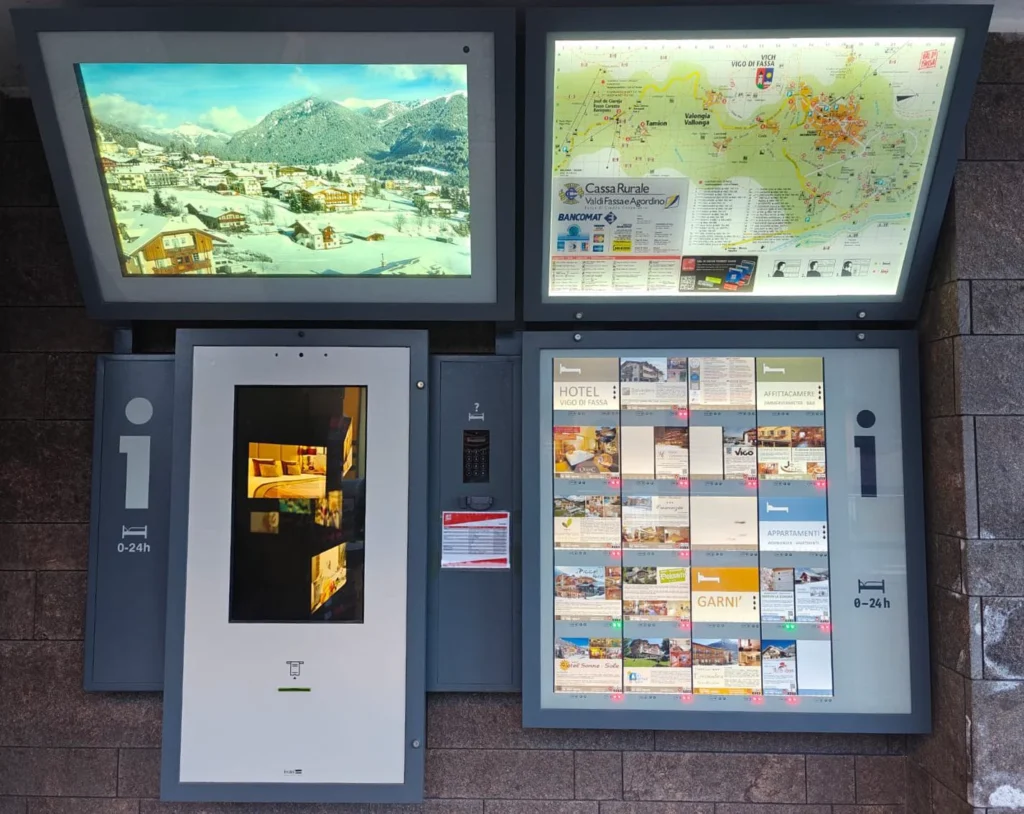
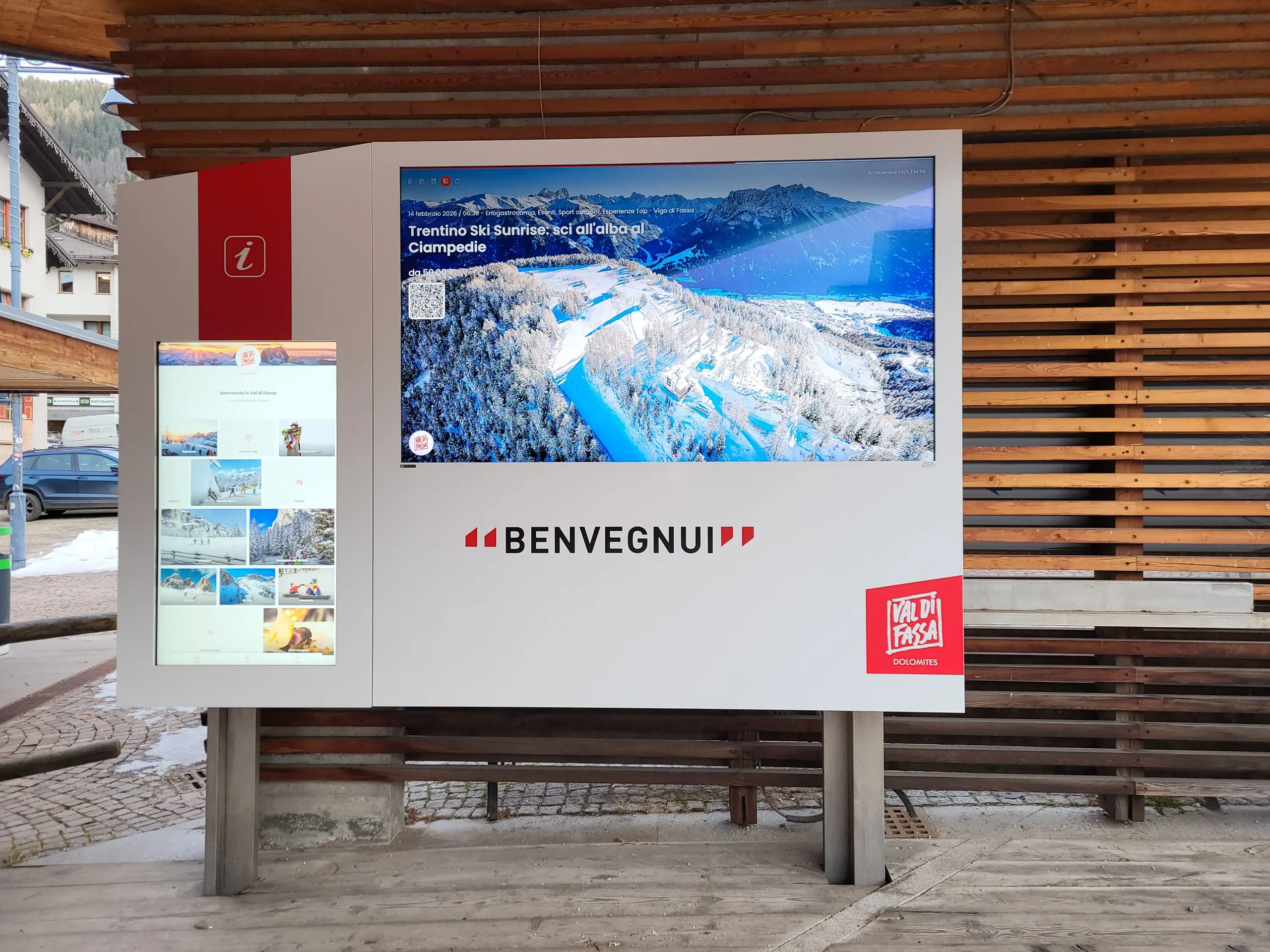
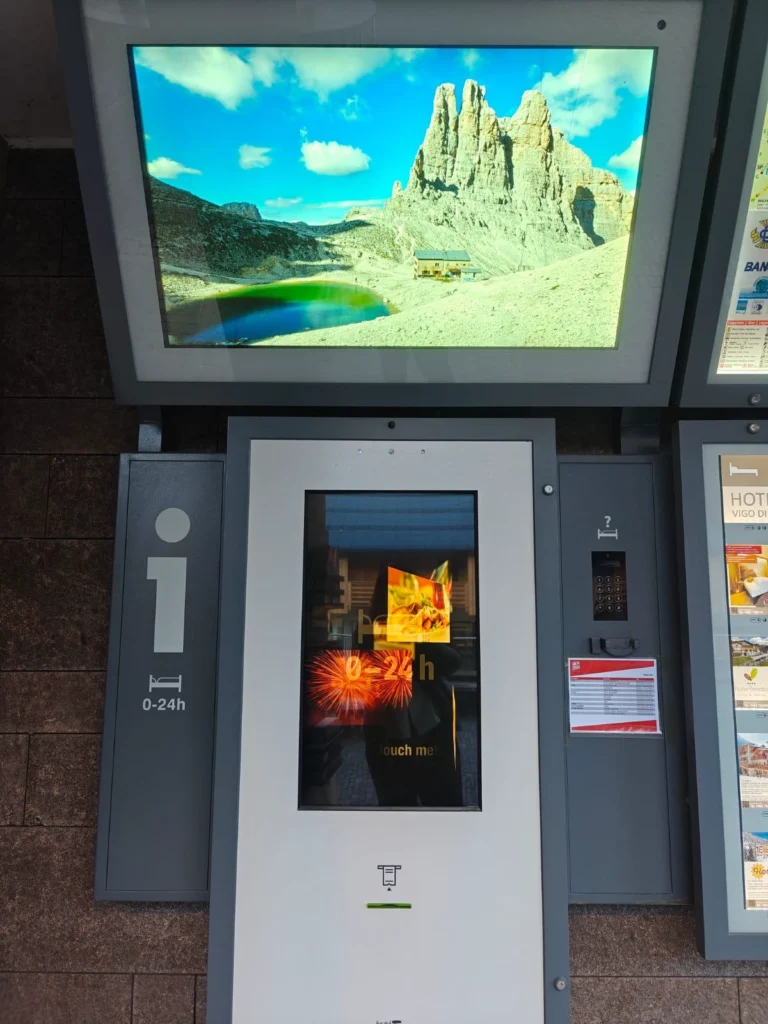
BEFORE
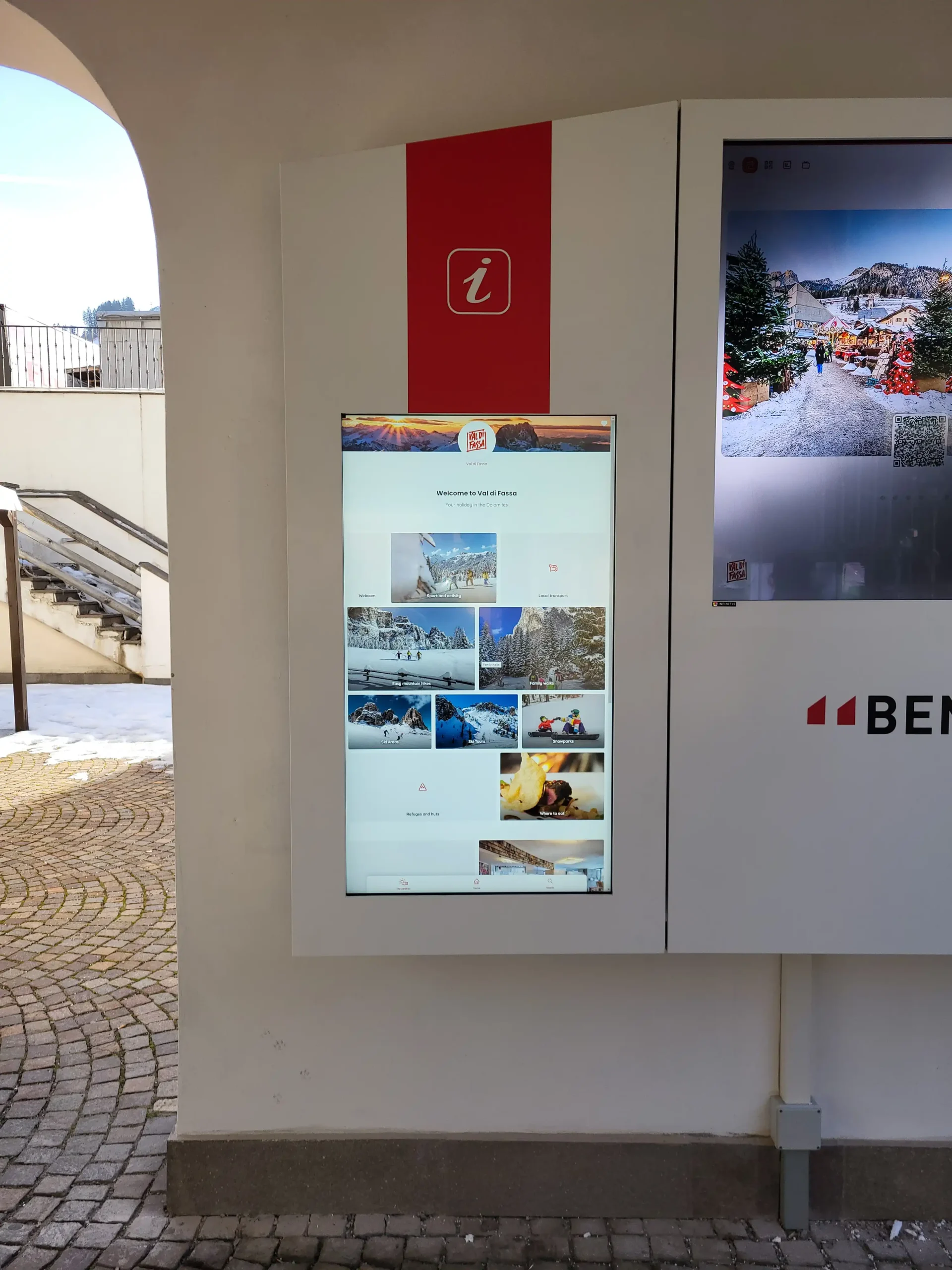
AFTER
A highly customized project
One of the most distinctive aspects of the project was the high level of customization required by the client.
During the design phase, several graphic concepts proposed by the client were analyzed. The FIDA team worked to identify a solution that would be both aesthetically consistent and technically replicable across all eight installations located throughout the valley.
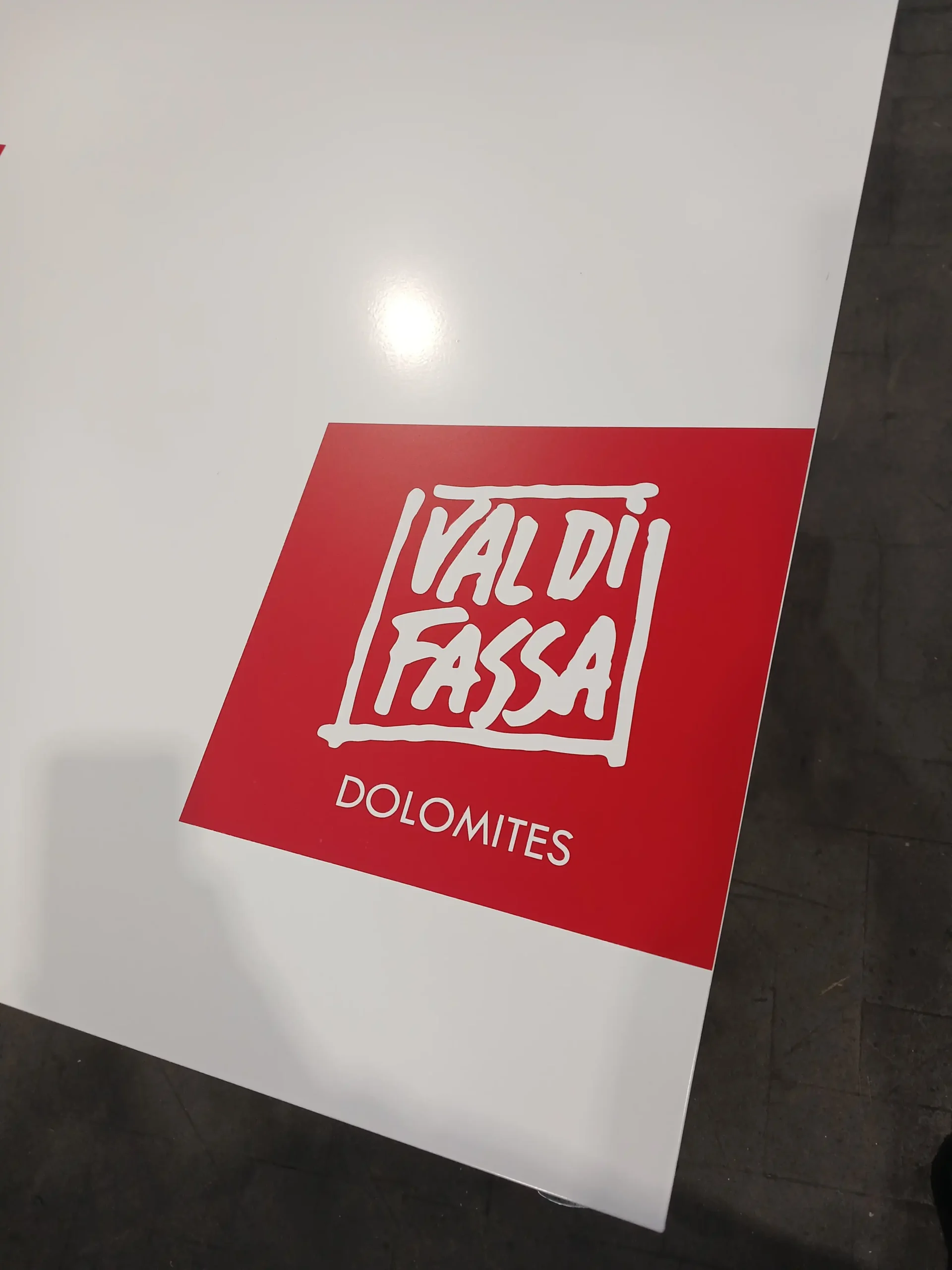
Particular attention was given to the color of the structures. The Val di Fassa Red used in the logo does not correspond to a single standard, but rather results from a specific combination of RAL shades requested directly by the client.
To ensure perfect color consistency with the region’s visual identity, FIDA carried out extremely precise customization of the finish, developing a fully tailored solution that combines a modern, technological design with strong visual integration into the local context.
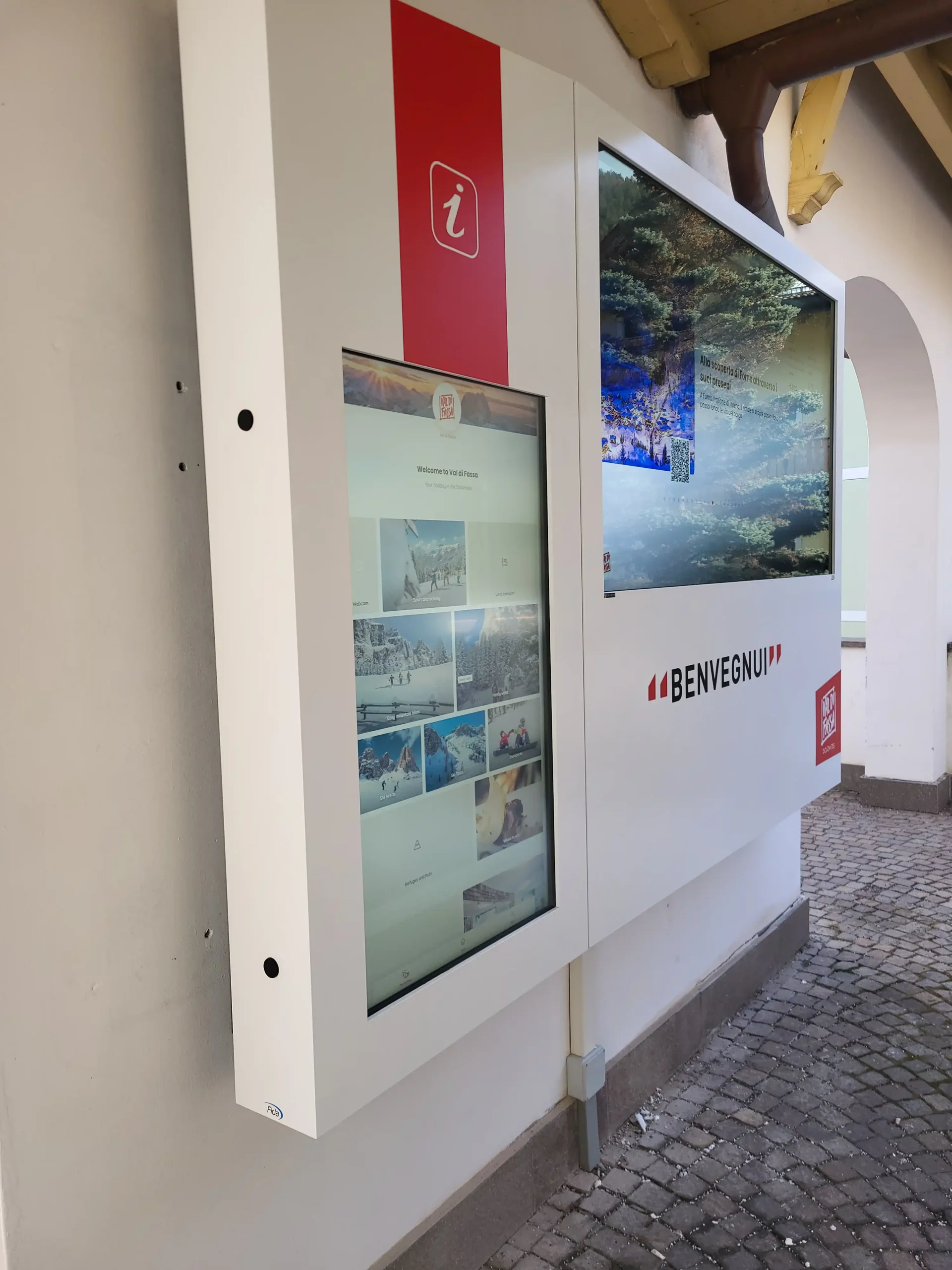
The SMS.P46HB outdoor monitor
At the technological core of the new installations is the SMS.P46HB outdoor monitor, designed for digital signage applications in outdoor environments.
The Full HD LED-backlit LCD display delivers 2,500 nits of brightness, ensuring perfect readability of content even in direct sunlight.
To guarantee proper operation in all weather conditions, the system uses an innovative vortex ventilation system that regulates the internal temperature without relying on traditional HVAC air-conditioning systems, reducing both energy consumption and maintenance costs.
The monitor structure is made of anti-corrosion aluminum, while the front door is protected by tempered laminated anti-vandal glass, a solution that ensures safety and durability in public spaces.
The devices are also equipped with a FIDA remote diagnostics system based on the SNMP protocol, which allows the status of electronic components, sensors and media players to be monitored through a simple web interface accessible from PC, tablet or smartphone.
The benefits of the new digital signage system
The installation of the new outdoor digital totems has brought several advantages for the region and for the management of public information.
Key benefits include:
- Greater visibility of informational content
- More dynamic and up-to-date tourist communication
- Remote management of the installations
- Reduced maintenance costs
- Visual integration with the valley’s identity
The project also fits within the broader context of infrastructure developments related to the Milano Cortina 2026 Winter Olympics. Val di Fassa is located next to Val di Fiemme, which will host important Olympic venues such as the “Giuseppe Dal Ben” Ski Jumping Stadium in Predazzo and the “Fabio Canal” Cross-Country Center in Lago di Tesero, designated for ski jumping, Nordic combined, cross-country skiing and Paralympic biathlon competitions.
FIDA’s experience in outdoor digital signage
With this project, FIDA confirms its expertise in developing high-reliability outdoor digital signage solutions that combine technology, design and customization.
The ability to design custom digital totems integrated into urban and landscape environments is a key element for applications in tourism, cultural and institutional contexts.
The Val di Fassa project demonstrates how a well-designed digital communication system can help improve the visitor experience and enhance the value of a territory, especially during international events of great visibility such as the Winter Olympics.